2026-10-13 ·
Why Does Your Dryer Take Too Long to Dry Clothes?
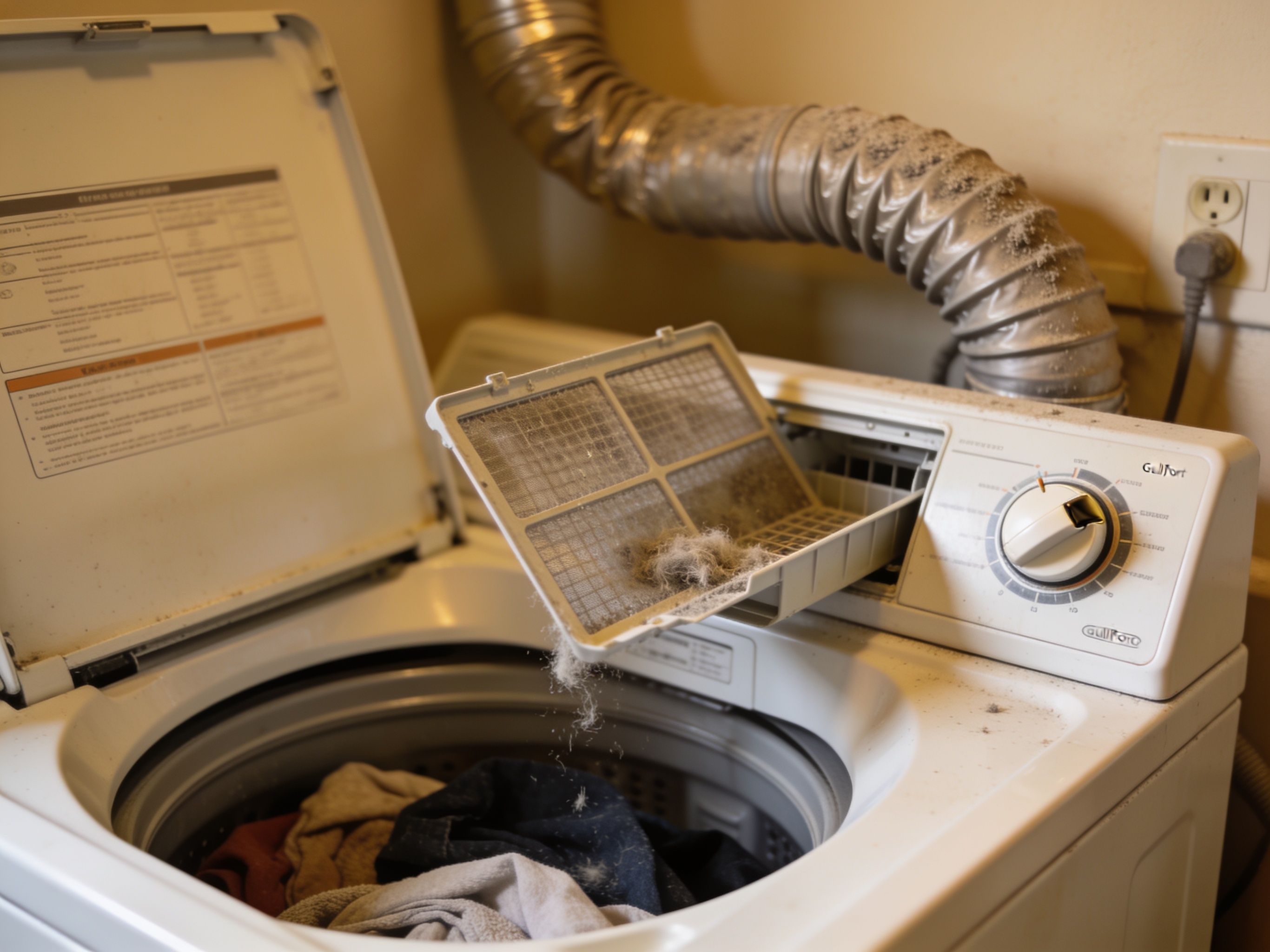
A dryer that needs more than 60–90 minutes for a normal load is almost always struggling to move air and water vapor out of the drum. In most homes we see around Gulfport, the cause is a restricted exhaust path, an overloaded drum, or a heating system that is not reaching full temperature. Heat is only part of the job. The dryer also has to carry moisture out through the vent, and anything that slows that airflow stretches every cycle.
Start With the Lint Trap and the Exhaust Vent
The lint screen is the first thing to check, but it is rarely the whole story. Even a clean screen can let fine lint slip past and collect in the duct behind the drum. That buildup narrows the passage, so humid air stays in the drum instead of leaving. Homes in older neighborhoods like Orange Grove and parts of North Gulfport often have long rigid or flexible ducts run through attics or crawlspaces, with several bends that cut airflow further.
A practical check: run the dryer on air-fluff for 10 minutes and hold a hand at the exterior vent hood. Strong, steady airflow means the path is open. Weak airflow, or a flap that barely lifts, points to a blockage. Most manufacturers recommend keeping total duct length short, with fewer than four 90-degree bends, and a dryer vent cleaning every 12 months is a reasonable baseline for a household that runs the machine daily. Lint buildup in the vent is also a fire hazard, which makes this the most important fix on the list.
Overloaded Drums and Wet Loads
Stuffing the drum is a common cause of slow drying, and it is easy to miss. Clothes need room to tumble so hot air can reach every surface. A full load of towels, jeans, or bedding can double the time a dryer needs, especially on a machine with a standard 7.0–7.5 cubic foot drum. Heavy cotton items hold more water than synthetics, so a load that mixes them with lighter fabrics will never dry evenly.
Spin speed matters too. If the washer leaves clothes dripping, the dryer is being asked to evaporate far more water than it was designed to handle. Check whether the washer's final spin is set to a lower speed or whether a suds problem is leaving extra moisture behind. Splitting large loads into two smaller ones often cuts total drying time more than any setting change.
Humidity Along the Gulf Coast
Gulfport sits in a humid subtropical climate with hot summers and mild winters, and that changes how a dryer behaves. In July and August, the air coming into a laundry room is already close to saturated, so the dryer has less capacity to pull moisture from the clothes. Garages and utility rooms in Turkey Creek and Lyman can run warm and damp, which slows evaporation even when the machine itself is working correctly.
Winter brings a different issue. Mild winters mean many homes keep the laundry room closed and sealed, and humidity from the dryer has nowhere to go if the vent is partially blocked. Condensation can then collect in the duct and dampen the next load. Some owners in West Gulfport and Handsboro also notice slower drying after storms, when power fluctuations and damp indoor air combine. Running a dehumidifier in the laundry area or keeping the exterior vent flap clear of leaves and debris helps more than people expect.
Heating Element, Thermostat, and Moisture Sensor Faults
If airflow checks out and the load is reasonable, the problem is usually inside the machine. An electric dryer relies on a heating element and a thermal fuse, and a failing element may still glow but produce less heat, extending every cycle. A gas dryer depends on an igniter and a gas valve, and a weak flame often shows up as longer runs and clothes that feel warm but not hot. These parts are inexpensive compared with replacing the whole dryer, and a repair typically falls in the $100–$400 range depending on the part and the model.
Modern dryers also use moisture sensors on the drum wall. Lint or fabric softener residue can coat these sensors and trick the control board into thinking the clothes are still wet, so the dryer keeps running. Cleaning the metal sensor bars with a cloth dampened with white vinegar, then drying them thoroughly, often restores normal cycle times. If the problem continues, the control board or sensor harness may need replacement.
When to Call a Technician
Some causes you can handle yourself. Clearing the lint screen, cleaning the sensors, and checking the exterior vent take minutes. Other symptoms call for professional diagnosis, especially a dryer that smells of burning, runs hot to the touch, or trips a breaker. Those signs can point to an overheating element or a failing thermal fuse, and they should not be ignored.
Before booking a visit, note how long a typical cycle takes, whether the dryer is electric or gas, and what you have already cleaned or checked. That information helps a technician work faster. Our team is available 24/7 at 11312 US 49 in Gulfport, MS 39503, so a dryer that stops in the middle of a busy week can be looked at without waiting for business hours. For an ongoing maintenance plan, our guide on how to extend the lifespan of your household appliances covers routine checks that prevent most slowdowns. If the venting or heating issue points to a deeper fault, dryer repair and dryer vent cleaning are the two services most often needed here in Gulfport.