2026-10-13 ·
How to Extend the Lifespan of Your Household Appliances
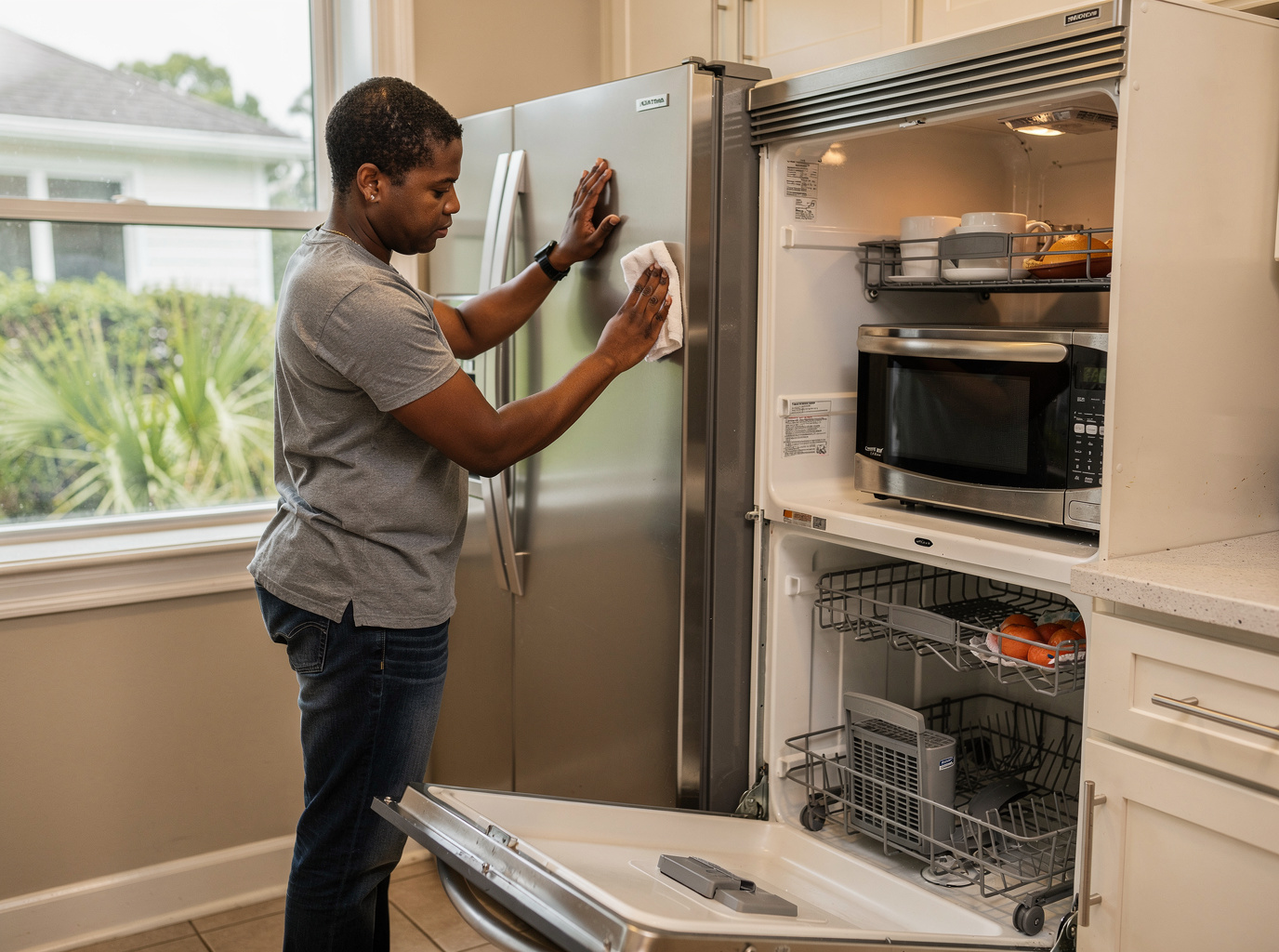
Most common household appliances last roughly 8–15 years, and the owners who reach the upper end of that range are rarely the ones with the most expensive models. They are the ones who clean the right parts on a schedule, keep airflow open, and catch small problems before they become expensive ones. In Gulfport's humid subtropical climate, with long, hot summers and damp air that lingers well into fall, those habits matter even more than they would in a drier region.
Why Gulfport's Humidity Works Against Your Appliances
Humidity is the quiet factor behind a lot of early appliance failures along the Coast. Warm, moist air carries more dust, lint, and fine debris into machines, and that material collects on coils, fan blades, and vent passages. Once it builds up, components run hotter and work harder, which shortens their life. Salt air is a real factor closer to the water, so homes near Gulfport Beach and Harbor Walk often see faster corrosion on exposed metal, hinges, and electrical connections than homes further inland.
The effect is noticeable across the whole county. Homes in Turkey Creek, Lyman, and Orange Grove deal with the same heavy summer humidity, and garages or laundry closets without air conditioning can become much warmer and wetter than the rest of the house. Appliances placed in those spaces need more frequent attention. Keeping the area around each unit clean, dry, and ventilated is one of the cheapest ways to protect a major purchase.
Keep Refrigerators and Freezers Running Efficiently
Refrigerators are the appliance that never gets a break, so small inefficiencies add up quickly. The condenser coils, usually at the bottom or back of the unit, should be vacuumed every 3–6 months in a humid area. When coils are coated in dust, the compressor runs longer to shed the same amount of heat, and that extra strain is one of the most common reasons compressors fail years earlier than expected.
Check the door gaskets too. Close the door on a dollar bill; if it slides out easily, the seal is weak and the compressor will cycle constantly. Keep the thermostat near 37°F for the fridge and 0°F for the freezer, since running colder than necessary wastes energy without preserving food any better. If the unit is making new grinding sounds, leaking water, or running warm, it is worth having it looked at before the problem spreads. Our team handles these calls through our refrigerator repair service, and a quick inspection often reveals a simple fix.
Clean Dryer Vents Before They Become a Fire Risk
Dryer maintenance is the single most important habit for both lifespan and safety. Lint buildup restricts airflow, which forces the heating element and thermostat to work harder and can overheat the unit. In a humid climate, clothes take longer to dry, so the dryer runs longer per load, and lint accumulates faster than many owners expect. Clean the lint screen after every load, and vacuum the lint trap housing about once a month.
The exhaust duct needs attention too. Most homes have a duct running through a wall, attic, or crawl space, and that duct should be checked at least once a year. A healthy exhaust run is short, straight where possible, and made of rigid or semi-rigid metal rather than thin foil or plastic that can crush and trap lint. If you notice clothes taking more than one cycle to dry, a hot cabinet, or a burnt smell, stop using the dryer and schedule service. Professional dryer vent cleaning reaches the sections of duct that a lint brush never touches.
Maintain Washers and Dishwashers for Steady Performance
Washing machines and dishwashers both depend on water flow, drainage, and clean filters. Hard water is common in parts of south Mississippi, and mineral scale can build up on heating elements and spray arms over time. Running a cleaning cycle with a washing machine cleaner or a cup of white vinegar once a month keeps internal parts clearer. Leave the washer door and dishwasher door slightly open between uses so moisture can evaporate and mildew does not take hold in the gasket.
For dishwashers, clean the filter at the bottom of the tub every few weeks and check that the spray arms spin freely. A dishwasher that suddenly leaves food residue behind is often dealing with a clogged filter or a partially blocked spray arm rather than a failed pump. Washers with an unbalanced load, loud banging, or water pooling underneath should be stopped and checked, since continued use can damage bearings and seals. Before assuming the machine is finished, read our guide on top signs your washing machine needs professional repair to recognize the symptoms that warrant a technician.
Know When Repair Beats Replacement
Not every breakdown means the appliance is done. A useful rule is to compare the repair estimate against the age of the unit and the cost of a comparable replacement. For a unit that is under about half its typical lifespan and has a single failed part, such as a fan motor, control board, or door seal, repair often makes sense. Many common repairs fall somewhere in the $100–$400 range depending on the part and labor, which is often far less than a new appliance.
Replacement becomes the better choice when the unit is near or past its expected life, when multiple major components are failing at once, or when repair costs approach half the price of a new model. Be careful with older appliances that have been repaired several times in a row, since each fix can mask a deeper problem. Clear, upfront pricing before any work begins keeps the decision honest. Our shop at 11312 US 49 in Gulfport can walk you through the numbers, and our phones are staffed 24/7 for urgent problems like a leaking refrigerator or a dryer that will not shut off.
A Practical Routine That Adds Years to Your Appliances
The appliances in your home will not last forever, but a steady routine can meaningfully extend their life. Start with the tasks that have the biggest payoff: clean refrigerator coils every few months, empty the dryer lint trap after every load, have the exhaust duct inspected once a year, and clear the dishwasher filter regularly. These take minutes and prevent the overheating, clogging, and corrosion that cause most early failures in a humid coastal climate.
Keep a simple log with the purchase date, the last service date, and any unusual sounds or performance changes. That record helps a technician diagnose faster and helps you decide whether a repair is worth the cost. Treating your appliances as long-term investments rather than disposable conveniences is the surest way to get the full 8–15 years you paid for, and in a place like Gulfport, where humidity never really takes a day off, that discipline pays off every season.