2026-10-13 ·
What Causes a Dishwasher to Leave Dishes Dirty?
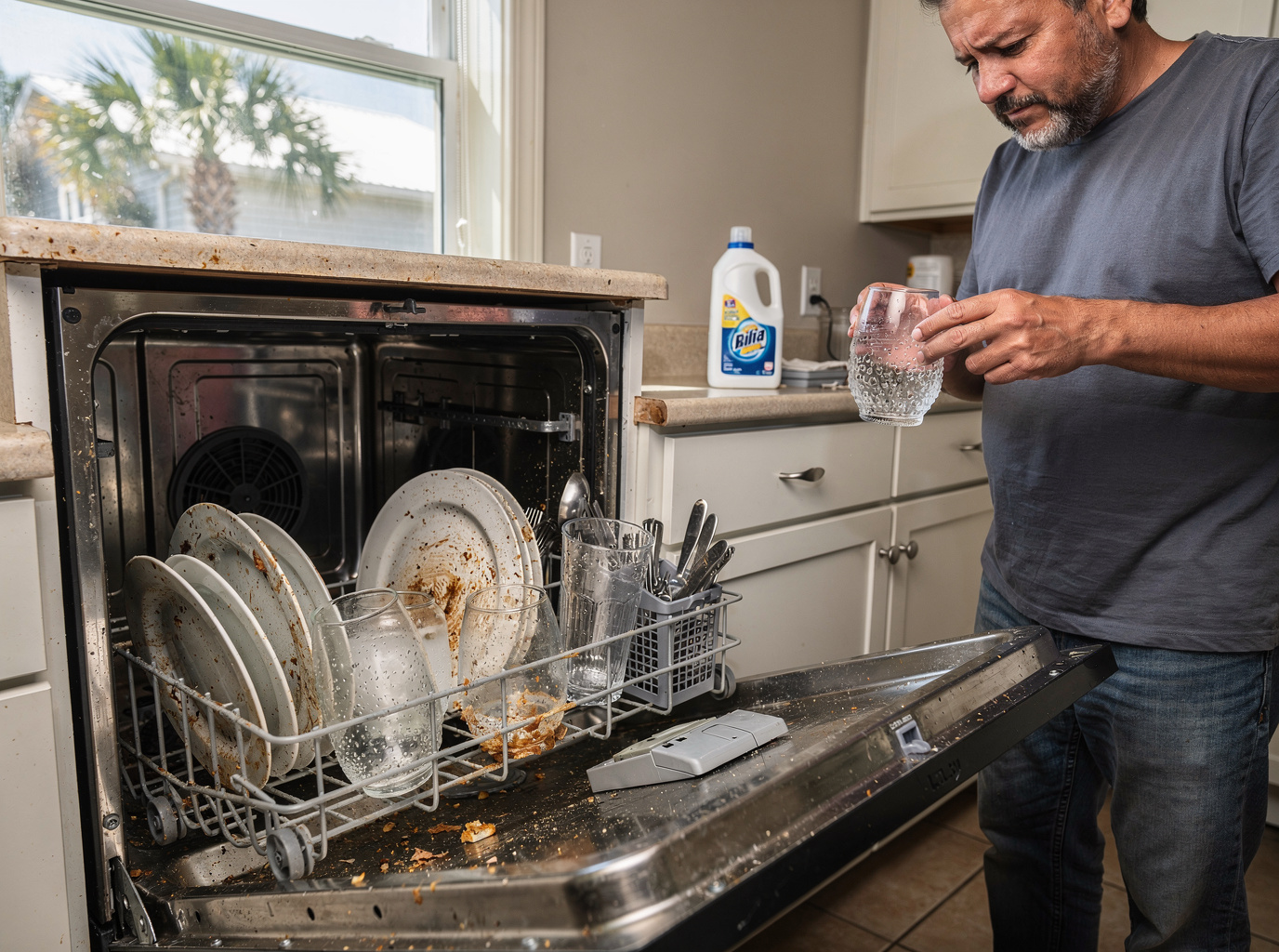
Most dishwashers leave dishes dirty for one of three reasons: water is not reaching the racks with enough force, the water is not hot enough to dissolve and lift grease, or the detergent is not working as intended. Many of these problems cost $0 to $25 to fix and take less than an hour, such as cleaning a clogged filter or repositioning a plate that blocks a spray arm. When a pump, heating element, or control board is failing, the repair usually falls between $150 and $400 in parts and labor, depending on the brand. Knowing which category your machine falls into is the first step, and it is the first thing a careful technician checks in Gulfport.
The Filter Is the Most Common Culprit
The filter at the bottom of the tub catches food particles, seeds, and small bits of broken glass before they can recirculate. When it becomes packed with debris, water still sprays, but it carries grit and grease back onto your plates instead of draining it away. You will often notice a gritty film on glassware, or a faint odor coming from the bottom rack. Most filters are removable by twisting or lifting, and the cylinder and mesh should be rinsed under warm water with a soft brush every few weeks. Many households in Gulfport run dishwashers daily, so a monthly cleaning is a reasonable habit. If the filter is cracked or the mesh is torn, replacing it is inexpensive and worth doing before the next load.
Blocked Spray Arms and Nozzles
The spray arms rotate because water pushes through small holes along their length, and those holes can clog with mineral deposits or food. When a spray arm is blocked, the racks above or below it receive little or no water, which is why dishes in one corner come out spotless while the rest stay dirty. Check whether the arms spin freely by hand before running a cycle. Pull them off, rinse the nozzles with a toothpick or thin wire, and make sure no tall pot or baking sheet sits where it can stop the rotation. Also look for a small plastic piece that hasn't snapped into place, since a loose arm can wobble and miss the target.
Water Temperature and Detergent Performance
Dishwashers depend on hot water to melt fats and activate the detergent. If your water heater is set below about 120 degrees Fahrenheit, or if the tub is filling with lukewarm water from a long pipe run, cleaning power drops noticeably. Run the hot tap at the sink until it turns hot before starting a cycle, and check the water heater setting. Detergent matters too. Old tablets that have absorbed humidity can clump, and powder left open in a damp cabinet loses strength. Gulfport's warm, humid summers make this especially common, so store detergent in a sealed container and buy smaller quantities when it is muggy.
Loading Mistakes That Block Cleaning
Even a healthy machine will underperform if dishes are packed in a way that prevents water from reaching them. Large platters placed along the side walls, bowls facing up, and cups nested together can trap food and create shadows where spray cannot land. Place bowls and cups at an angle so water can drain out, keep bulky items toward the back, and avoid overloading the bottom rack. Do not rinse dishes thoroughly before loading, since the detergent needs some food to work on, but do scrape off large chunks. Following these habits often solves a problem that seems mechanical but is really about how the racks are used.
Hard Water and Mineral Buildup
If your home draws hard water, minerals can build up on heating elements, spray arms, and the interior walls, leaving a cloudy film that looks like dirt. Hard water also reduces the effectiveness of detergent, so dishes may feel gritty even after a complete cycle. A water softener or a rinse aid can help, and a descaling product designed for dishwashers can remove existing deposits. Run an empty cycle with the recommended cleaner about once a month. Homes in older parts of Gulfport, including North Gulfport and Orange Grove, often have older plumbing, so it is worth testing your water or asking a technician what they see during a service call.
When a Pump or Heating Element Is Failing
Some problems are beyond routine cleaning. A circulation pump that is weakening will produce less water pressure, which leaves dishes wet and dirty even with a clean filter. A heating element that has failed will leave the water cool, causing residue on glassware and failing to dry plates. Listen for a loud grinding or humming noise during the wash cycle, and watch for water that stays standing at the bottom of the tub. Replacement parts often cost $50 to $250, and labor adds to the total. Because a dishwasher's expected service life is roughly 9 to 12 years, an older unit may be worth repairing only if the fix is modest.
Getting Help in Gulfport
Start with the simple checks: clean the filter, inspect the spray arms, confirm water temperature, and load the racks properly. If the dishes remain dirty after a few cycles, the cause may be a failing part or a drainage issue that needs a closer look. Alice Port Group works on dishwashers and other household appliances, and we are based at 11312 US 49, Gulfport, MS 39503, with 24/7 availability for urgent appliance problems. If you would like help with a specific unit, our dishwasher repair page explains what the visit includes. For broader tips on keeping appliances running longer, read how to extend the lifespan of your household appliances.